Inclusive Banking Usability Research
⋆˙⟡
An Australian bank aimed to build a new payment terminal that worked seamlessly for all users — especially those with accessibility needs. Early development revealed usability issues that weren’t obvious without real-world testing. As researchers on the project, we focused on understanding how diverse users interacted with the device.
After launching iterative tests and synthesising insights, we pinpointed key accessibility and usability barriers. Our research directly informed design changes and hardware adjustments, leading to improved experiences for consumers, merchants, and internal staff.
Product Designer, Transpire
Problem definition
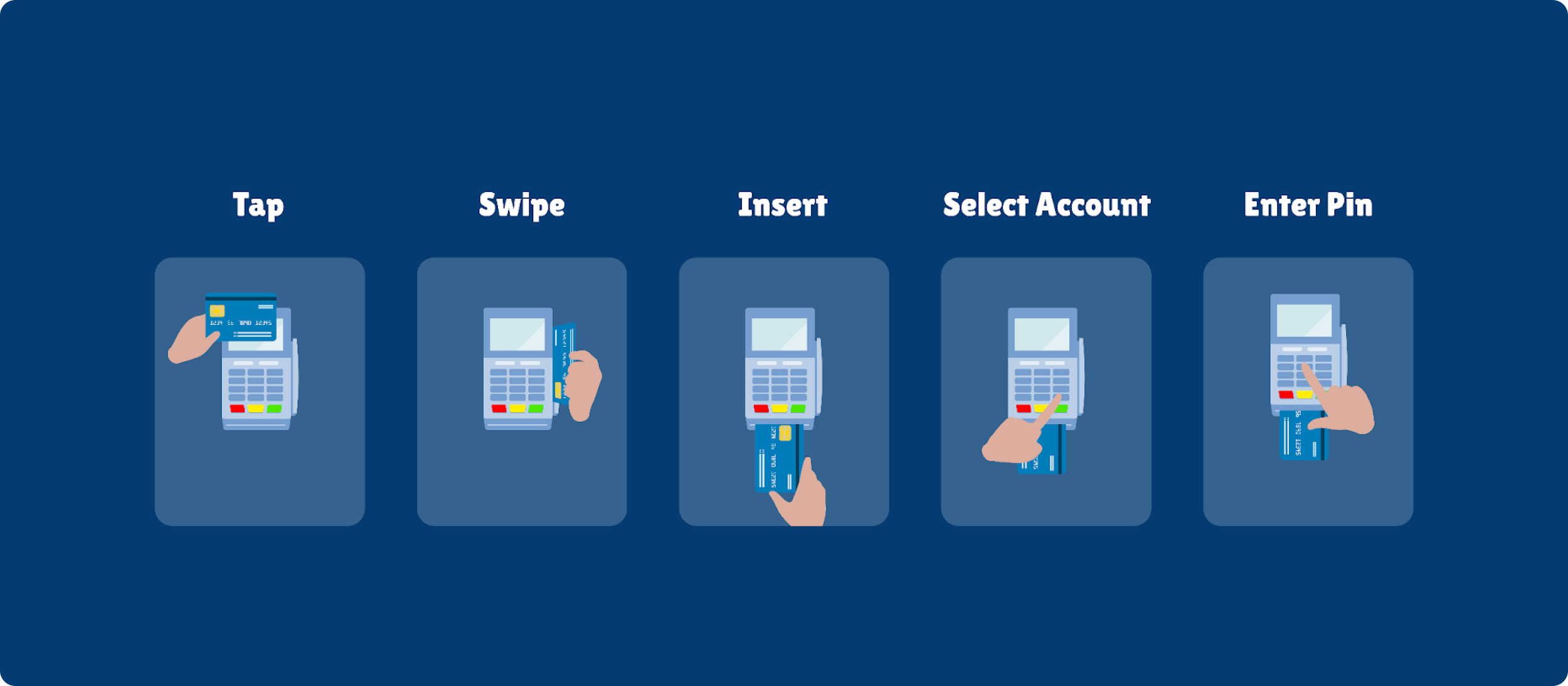
The bank wanted a payment solution that was usable and accessible for people from all walks of life — including those with disabilities. Given sector-wide accessibility failures by competitors and strict accessibility standards, it was crucial to discover whether users could successfully perform basic tasks like tapping, swiping, inserting a card, selecting accounts, and entering a PIN on the new terminal.
Research Summary
Our research included:
Recruiting participants with a wide range of backgrounds and accessibility needs
Conducting usability sessions in a simulated environment to mirror real-world distractions
Measuring task completion and qualitative user satisfaction
Documenting obstacles that prevented users from completing key payment actions independently
Goal
Our objective was to ensure the payment terminal was truly usable by people with diverse abilities — not just meeting compliance checklists, but creating a seamless real-world experience.
Key Design Decisions
Insights we uncovered included:
Interface elements that confused users or lacked tactile distinction
Button placements that increased the risk of user error
Voice-over script changes that improved guidance for visually impaired users
Results & Outcomes
We documented and communicated a set of prioritized usability and hardware recommendations, which were shared with both stakeholders and the terminal hardware manufacturer. Key software tweaks and hardware adjustments significantly improved task success rates.
Final Reflection
Inclusive testing revealed issues that wouldn’t have been found through standard lab studies
Accessible documentation and thoughtful participant setup elevated the quality of insights
Research learnings were incorporated into broader organizational practices for future studies